AI C++ Code Generator

Describe the program and Entro writes the C++ in the chat, then explains the memory decisions it made. You copy the code and build it with your own compiler.

Write a C++ program that finds the shortest path in a weighted graph. Store the graph as an adjacency list, use Dijkstra's algorithm and build the priority queue with std::priority_queue. Read the number of nodes and edges from standard input and print the path with its total weight. The code should compile as C++17 and use no raw pointers. Explain the time complexity and what each function does.

Blue parts are the places to fill in with your own details. Tab selects the next one, Enter sends, Shift and Enter starts a new line.

This tool runs on Entro.

Example results

Have C++ written, ask about memory, get compiler output decoded

Code where ownership is clear

Entro writes with std::unique_ptr, std::shared_ptr and RAII, or with new and delete if your assignment asks for raw pointers. Below the code it says which object owns the memory and when that memory is released.

STL and templates

You get code built on vector, map, unordered_map, set and the functions in the algorithm header. Have your own class template written, or ask what a hard-to-read template expression actually means.

It reads compiler output

Paste a template error that runs for pages, or the linker's "undefined reference" message. Entro points to the line where the real problem starts and writes the fix.

Read through a segmentation fault together

If the program crashes, paste the code and say what it was doing at the time. Entro looks for the loop that runs past the end of an array, the pointer used after it was freed, or the variable that was never initialized. Because it does not run the program, it gives its best guess with the reasoning. You build and test the fix, and if nothing changes you add the debugger output.

You set the standard and the limits

An embedded project stuck on C++11 and a desktop program on C++20 are written differently. Put the standard, the compiler and any constraint in your request: no exceptions, no dynamic allocation, standard library only. Entro writes within those limits and notes why it picked each language feature.

Who asks for C++, and for which job

  • Linked lists, binary search trees, heaps and graph assignments. Once the code is written, ask Entro to trace it step by step on a sample input so you can see where each pointer is at every stage.

C++ examples answered by Entro

  • cpp
    #include <iostream>
    #include <memory>
    #include <string>
    #include <utility>
    
    template <typename T>
    class LinkedList {
    private:
        struct Node {
            T data;
            std::unique_ptr<Node> next;
    
            explicit Node(T value) : data(std::move(value)), next(nullptr) {}
        };
    

    Write a singly linked list class template in C++ with functions to append at the end, remove from the front, search and reverse the list. Hold the nodes with std::unique_ptr. In main, show a short usage example with int and another with std::string.
  • cpp
    #include <iostream>
    #include <string>
    #include <vector>
    #include <unordered_map>
    #include <algorithm>
    #include <cctype>
    
    int main() {
        std::unordered_map<std::string, int> word_counts;
        std::string token;
    
        // Read words token by token from standard input
        while (std::cin >> token) {
            std::string cleaned_word;
    

    Write a C++ program that counts the words in text read from standard input. Convert words to lowercase, strip punctuation and keep the counts in a std::unordered_map. Print the 10 most frequent words in descending order, using std::sort with a lambda for the ordering.

  • cpp
    #include <iostream>
    #include <utility>
    #include <algorithm>
    
    class Buffer {
    private:
        int* data_;
        std::size_t size_;
    
    public:
        // Default / Sized constructor
        explicit Buffer(std::size_t size = 0)
            : data_(size ? new int[size]() : nullptr), size_(size) {
            std::cout << "[Constructor] Allocated " << size_ << " elements.\n";
    

    Write a C++ Buffer class that wraps a dynamic int array and follows the rule of five: destructor, copy constructor, copy assignment, move constructor and move assignment. In main, print a message from each special member function to show when it is called.

  • cpp
    #include <iostream>
    #include <vector>
    
    const int* getFirstElementBuggy() {
        std::vector<int> numbers = {10, 20, 30};
        return &numbers[0]; // Bug: returns a pointer to elements owned by a local vector
    }
    
    int main() {
        const int* ptr = getFirstElementBuggy();
        std::cout << *ptr << std::endl; // Undefined Behavior: reads deallocated memory
        return 0;
    }
    

    Write a small C++ example of a dangling pointer bug: a function returns a pointer to the first element of a local std::vector and the caller reads through it. Explain why this is undefined behavior and show two different correct solutions separately.

  • cpp
    // Configuration
    const int SENSOR_PIN = A0;
    const int LED_PIN = 13;
    const float TEMP_THRESHOLD = 28.0;   // Threshold in degrees Celsius
    const unsigned long INTERVAL_MS = 1000; // Read interval (1 second)
    const int NUM_READINGS = 10;
    
    // Moving average buffer
    float readings[NUM_READINGS];
    int readIndex = 0;
    float runningTotal = 0.0;
    bool bufferFilled = false;
    
    unsigned long lastReadTime = 0;
    

    Write C++ code for an Arduino: read an analog temperature sensor on pin A0 once a second, compute the average of the last 10 readings and print it to the serial port. Turn on the LED on pin 13 when the average passes a threshold defined at the top of the sketch. Do the timing with millis, without delay.

  • cpp
    #include <iostream>
    #include <cmath>
    
    class Vec2 {
    public:
        float x;
        float y;
    
        constexpr Vec2() : x(0.0f), y(0.0f) {}
        constexpr Vec2(float x, float y) : x(x), y(y) {}
    
        // Vector addition
        Vec2 operator+(const Vec2& rhs) const {
            return Vec2(x + rhs.x, y + rhs.y);
    

    Write a Vec2 class in C++ for use in game code: operators for addition, subtraction and scalar multiplication, plus length, normalize and dot product functions. Handle normalizing a zero-length vector safely and add a short usage example.

How to write C++ code with AI

  1. 1

    Describe the program

    Change the highlighted parts in the box: the problem, the algorithm and the C++ standard. Adding the input format and any constraints gets you code closer to what you need. Sending it opens the Entro chat; without an account you sign up first and your request is kept.

  2. 2

    Read the code and the notes

    The code arrives in a highlighted block with a Copy button. If you want the header and the source file apart, ask for them as separate blocks. Use the same chat to ask about any pointer or reference you don't follow.

  3. 3

    Build it, bring back the output

    Compile and run the code with your own compiler. If it reports an error or a warning, paste the output without trimming it. Entro finds the line involved and writes a new version.

Frequently asked questions

Does Entro compile C++ code?

No. Entro has no compiler; it writes and explains the code, and building and running happen on your machine. The code may fail to compile the first time, especially if your request did not name the compiler or the standard. Paste the compiler output into the chat and Entro reads the error and corrects the code.

Can it find a memory leak?

It looks for one by reading the code: a new with no matching delete, a delete skipped by an early return, shared_ptr objects that keep each other alive. It does not run the program under a memory checking tool. If you have a report from such a tool, paste it too, and Entro matches it to the code and explains which allocation was never freed.

Which C++ standard does it write for?

Whichever you name. Put C++11, C++14, C++17, C++20 or C++23 in the request, and if you didn't, ask which standard the code assumes. Mention it if your school or company uses an older compiler, because features such as structured bindings and std::optional are missing from some of them.

Can it upload code to an Arduino or another board?

It can't. Entro has no access to your computer or to devices plugged into it. Give it the board model, the sensor and the pins and it prepares the code to match; you upload from your own development environment. If the board misbehaves, paste the serial output into the chat and Entro reviews it alongside the code.

Can I give it a multi-file project?

Entro cannot connect to your project, so you hand it the files. A message takes up to 3 files and reads about 80,000 characters in total; past that the rest is cut off and Entro tells you so. In a large project, picking only the headers and sources involved in the bug gives better results.

Is the code it writes fast?

Entro does not run the code or time it; what it says about speed comes from complexity analysis and well-known patterns. It points out needless copies, allocation inside loops and containers that don't suit the job. You get the real numbers from your own measurements. Share them in the chat and the next suggestion takes them into account.

I want a game that runs in the browser. Do I need C++?

You don't. The Entro chat writes C++ game code but does not build or play it. If you want a game that opens in a browser and can be shared with a link, Builder in Entrobase creates it and you try it in the preview. Ask for that in the chat and Entro takes you to Builder.

Does it cost anything?

The Entro chat works on the Free plan too. Every piece of code you ask for counts toward your plan's AI usage, and the pricing page shows how much each plan includes. There is no setup; the chat opens in your browser.

More AI tools

  • AI Rust Code Generator

    Ask for Rust and Entro writes it in chat, explaining ownership, borrowing and error handling with Result and Option. Paste a compiler error to see the cause.

  • AI C# Code Generator

    Describe the task and Entro writes C# in chat: .NET classes, LINQ queries, Unity scripts and desktop forms. Paste an error to get the cause and a fix.

  • AI Java Code Generator

    Describe what you need and Entro writes the Java in chat: classes, collections, Spring endpoints, JUnit tests. Paste a stack trace to get an explained fix.

  • AI Python Code Generator

    Describe the task and Entro writes the Python in chat: pandas clean-ups, automation scripts, API calls. It explains the code and helps you fix errors.

  • AI Coding Assistant

    Entro writes, explains, debugs and translates code in chat. Need a whole site or app? Builder creates the project and you download the code as a ZIP.

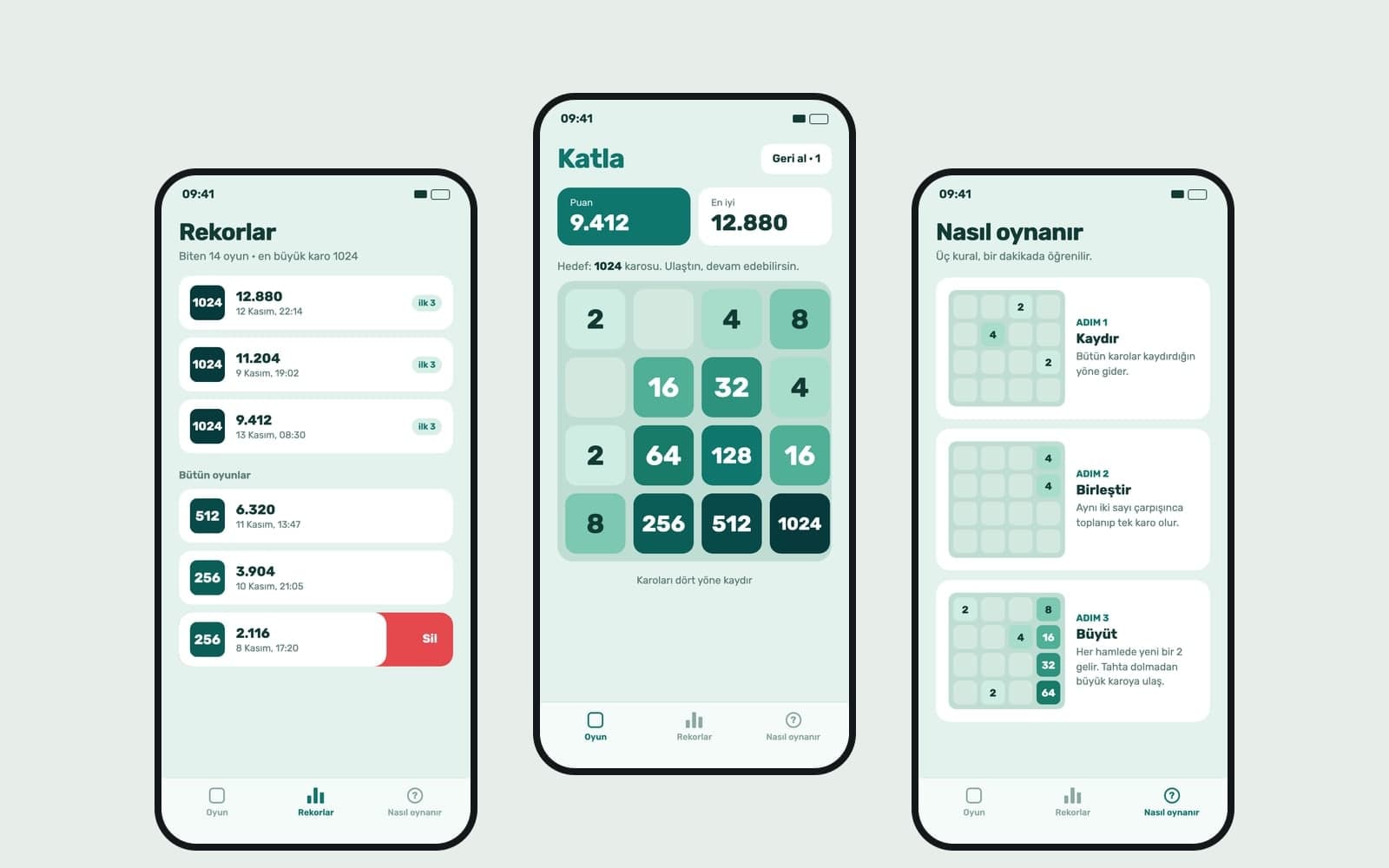
  • AI Game Maker Prompt: 8 Prompts for Mobile Puzzle Games

    AI Game Maker

    Write your game idea and Entrobase builds a first version that runs in the browser. Play it in the preview, change rules by chat, publish and share the link.

You describe it, Entrobase builds it.

Create with Entrobase