ChatGPT Brand Identity Prompts: 9 Ready-to-Use Prompts
9 brand identity prompts for ChatGPT, Gemini and Claude: an identity board, logo mockups, color palette, brand guidelines and a social media kit; works in Entrobase Canvas.
Tested: EntroGen Flash, November 2026
Prompt
Fill in the fields below and the prompt updates instantly. Copy it and use it in any AI tool.
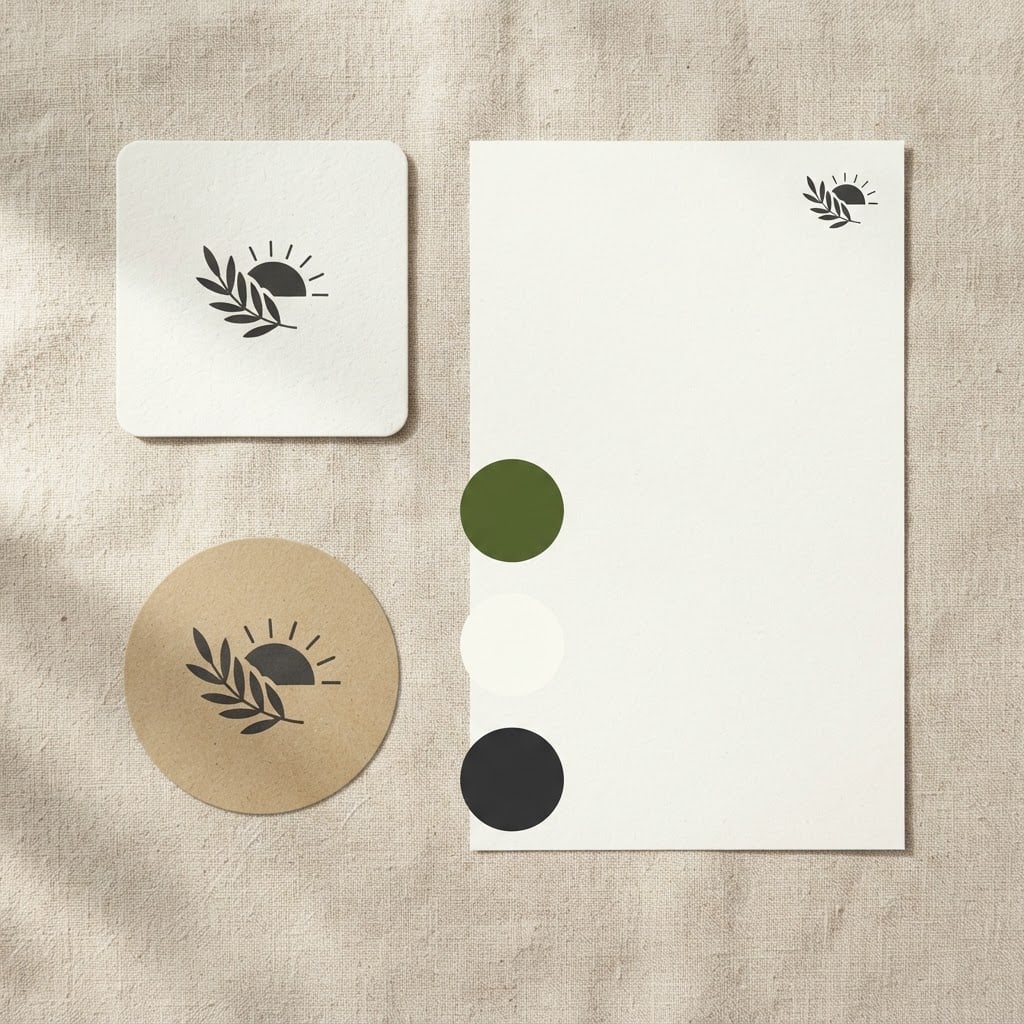
Create a wordless brand identity board image for a brand.
Branda boutique olive oil brand.
Symbolan olive branch merged with a half sun; the same symbol repeats on every piece.
Pieces
a business card with only the symbol on its front
a blank letterhead with a small symbol in the corner
a round sticker with the symbol
three round flat color swatches
Surfacespaper and cards without any text or lines; only the symbol and flat color areas.
Stylewarm and natural, textured papers on a light linen background.
Palettemain color #5a6b2f, off-white and dark charcoal; three colors at most.
Lightsoft daylight from the left, short soft shadows.
Anglestraight from above (flat lay).
Compositionthe pieces arranged in the center in an even, grid-like layout with space at the edges.
Aspect ratio 11.
Image made with this prompt
8 more ready-to-use prompts
Different takes on the same topic. Copy any of them as is and replace the parts in square brackets.
1.Brand identity prompt for ChatGPT (strategy)
When to use: When you want the brand's positioning, audience and voice written down before any visuals.
Prepare a brand identity strategy.
- Brand
- [e.g. a boutique olive oil producer on the Aegean coast].
Output
- 1One-sentence positioning
- 2Target audience (2 profiles)
- 34 adjectives for the brand personality
- 4Brand voice: 3 dos, 3 don'ts
- 5Color palette suggestion (3 colors with hex codes)
- 6Font pairing (heading + body)
- Tone
- plain and concrete.
2.Brand guidelines prompt for Claude
When to use: When your team and agency need a written brand usage guide to follow.
Write short brand guidelines for a brand.
- Brand
- [e.g. an architecture studio].
Sections
- 1Logo usage and clear space
- 2Colors (hex and usage ratio)
- 3Typefaces and hierarchy
- 4Photography style
- 5Tone examples: 3 right, 3 wrong sentences
- Format
- headed and bulleted, 600 words at most.
3.Brand identity mockup prompt for Gemini
When to use: When you have a logo and want to see it on a business card, letterhead and envelope.
Show the logo I uploaded on a stationery set.
- Pieces
- business card, letterhead, envelope.
Rules
- The logo is identical and undistorted on every piece.
- No text on the paper, only the logo.
- Light
- soft daylight.
- Angle
- straight from above.
- Background
- plain light gray.
- Ratio
- 1:1
4.Brand identity kit prompt (social media)
When to use: When your Instagram and LinkedIn avatar, cover and posts should share one identity.
Show a wordless social media identity kit for a brand.
Pieces
- round avatar (symbol only)
- horizontal cover image (symbol and pattern)
- 3 square post backgrounds (same color and pattern language)
- Symbol
- [e.g. an olive branch and sun].
- Color
- [e.g. olive green and cream].
- Text
- none.
- Ratio
- 1:1
5.Brand color palette and texture board
When to use: When you want to pick the brand's color and material mood visually before the logo.
Create a color and texture board for a brand.
- Brand mood
- [e.g. calm, natural, trustworthy].
- Content
- 5 round color swatches, 2 fabric and paper textures, 1 small leaf.
Rules
- No text in the image.
- Pieces evenly spaced.
- Angle
- straight from above.
- Ratio
- 4:5
6.Packaging brand identity prompt
When to use: When you want to see the identity on the product's box, bottle or bag.
Show a brand's packaging set.
- Products
- [e.g. glass bottle, cardboard box, paper bag].
- Identity
- the same symbol [e.g. olive branch] and the same color [e.g. olive green] on all.
Rules
- No text on the labels, only the symbol.
- Products side by side on plain cream.
- Light
- soft studio light.
- Ratio
- 4:5
7.Brand mood board prompt
When to use: When you want to show a designer or agency the brand's feel in one image.
Create a 3x3 grid mood board for a brand.
- Brand mood
- [e.g. Mediterranean, sunny, handmade].
- Content
- texture, light, space, product and color tiles.
Rules
- No text or logos in the image.
- Tiles in one color family.
- Ratio
- 1:1
8.Storefront and sign for an identity presentation
When to use: When you want to show a client how the identity looks on a shop sign and window.
Show a brand identity on a shop front.
- Sign
- a round sign above the door, symbol only [e.g. olive branch].
- Window
- a small white symbol on the shop window.
- Facade color
- [e.g. olive green].
- Light
- afternoon sun.
- Rules
- no text and no people in the image.
- Ratio
- 4:5
What this prompt does
Looking for brand identity prompts? Copy one of the 8 variants below: brand strategy and voice in ChatGPT, brand guidelines in Claude, placing your logo on stationery in Gemini, a color palette, a social media kit and packaging. The main prompt above creates a wordless identity board that shows the same symbol on a business card, letterhead, sticker and color swatches.
Where to use it
- Identity presentation for a client
- First visual direction for a new brand
- Brand case study for a portfolio
- Check before sending to print
- Reference board for a designer
Fields you can fill in
The fields you can change in the form above and their default values.
- BrandFree text
- a boutique olive oil brand
- SymbolFree text
- an olive branch merged with a half sun
- StyleOne of 4 options
- warm and natural, textured papers on a light linen background
- Main colorColor
- #5a6b2f
Step by step
- 1
Describe the brand and the symbol
Write what you sell in the Brand field and one shape in the Symbol field (for example an olive branch and a half sun). If you already have a logo, upload it with the Gemini variant to build the same board with your own mark.
- 2
Pick a style
Warm and natural suits food, handmade goods and cafes, modern minimal suits tech and consulting, luxury dark cards suit jewelry and hotels, and the bright style suits young consumer brands.
- 3
Generate in Canvas and check the pieces
Open Canvas with Use Prompt and generate at 1:1. Check that the symbol looks the same on every piece and that no unwanted text appears on the cards; if it does, move the no-text surfaces line higher.
- 4
Write the verbal side separately
Next to the visual identity you need a voice, tagline and usage rules. The ChatGPT and Claude variants prepare these as a written guide.
Tips and variations
- Fix the three palette colors with hex codes; using the same codes on the website and social media keeps the identity consistent everywhere.
- Asking for a straight-down flat lay keeps every piece uncropped and at an even size.
- Do not ask for text on the business card or letterhead; add name and address in a design tool, since models can drop letters in long text.
- Google's Gemini 3.1 Flash Image page says it generates at 1K by default; enough for a presentation screen, while print pieces need separate design files.
Frequently asked questions
How do I use a brand identity prompt in ChatGPT?
Paste the visual prompt on this page for the board, and the ChatGPT variant for strategy. The second one writes positioning, audience, brand voice and a color suggestion.
Can Gemini make a brand identity mockup?
Yes. Upload your logo to Gemini and paste the mockup variant; it shows the same logo on a business card, letterhead and envelope. Without a logo, the main prompt draws the symbol itself.
Is there a good Claude brand identity prompt?
Claude does not generate images, but it writes brand guidelines well: logo usage, color codes, type pairing and tone examples. The Claude variant on this page asks for these sections in order.
What goes into a brand identity kit?
Usually a logo and symbol, a color palette, typefaces, business card and letterhead, social media avatar and cover images, and a short usage guide.
What is the difference between a logo and a brand identity?
A logo is one mark; a brand identity is that mark together with its colors, typefaces and every surface it appears on. The board on this page shows how the symbol works across those surfaces.